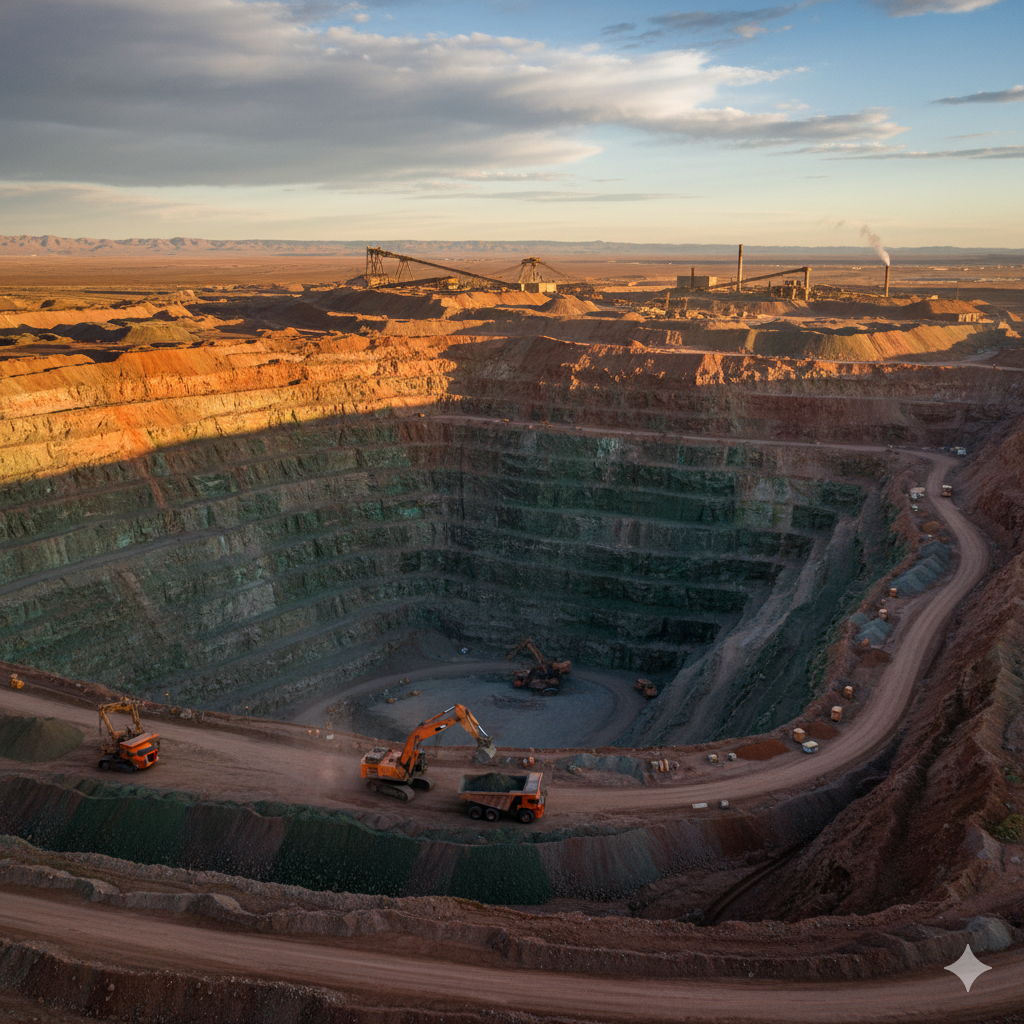
You’re standing where past and future metals meet: Michigan shaped America’s early copper industry and now hosts modern nickel and copper projects that feed battery and infrastructure supply chains. You’ll learn why Michigan’s Upper Peninsula matters again—its legacy mines, current operations, and new projects directly affect jobs, materials for electric vehicles, and regional economies.
Follow the story from 19th-century copper booms to today’s regulated, technology-driven mining that balances production, worker safety, and environmental protection. The article will unpack historic sites, current practices, and the economic impact you should watch if you care about supply chains, local economies, or energy transition materials.
History and Overview of Mining in Michigan
You will find a long history that begins with Indigenous copper working and expands into 19th–20th century industrial mining for copper and iron. The Upper Peninsula supplies most of the state’s mineral wealth and preserves many historic sites you can still visit.
Early Mining Developments
Indigenous peoples began mining native copper on the Keweenaw Peninsula as early as 3000–5000 BCE, using stone tools to extract and shape large masses of copper for tools and ornaments. Archaeological finds show trade networks: you can find Keweenaw copper artifacts far from Michigan, indicating wide prehistoric exchange.
Commercial mining began in the 1840s after prospectors recognized rich surface and near-surface copper and iron deposits. By the 1850s, towns and shipping ports formed around mine shafts and stamp mills, and by the 1870s Michigan emerged as a leading U.S. producer of copper and later iron. You’ll see technological shifts from hand-dug pits to steam-powered hoists and deep underground shafts through that period.
Major Minerals Mined
Copper dominates mining in Michigan history, especially in the Keweenaw Peninsula where native copper occurred in amygdaloidal basalt and conglomerates. Since 1844 Michigan has produced billions of pounds of copper used in electrical wiring, plumbing, and industrial applications.
Iron became commercially important with the opening of the Marquette Range (mid-1800s), followed by the Menominee and Gogebic Ranges. Iron ore shipments drove regional rail and shipping infrastructure. You’ll also encounter smaller-scale mining for silver (often associated with copper), and modern exploration for aggregate, industrial minerals, and limited nonmetallic resources.
Key Mining Regions
The Keweenaw Peninsula forms the core of Michigan’s copper country; towns such as Houghton, Calumet, and Eagle River grew around mine operations and remain mining heritage centers. The peninsula’s geology—volcanic basalts with native copper—made shallow and deep mining viable for over a century.
The Marquette and Menominee iron ranges in the eastern and southeastern Upper Peninsula became major iron ore producers after the 1840s and 1870s respectively. Gogebic Range near Ironwood produced later iron deposits. Transport corridors from mines to Great Lakes ports and railheads shaped settlement and regional economies you can still trace on maps.
Notable Historical Sites
You can visit preserved mine sites and museums that interpret Michigan’s mining past. Key sites include the Quincy and Calumet & Hecla operations in the Keweenaw, now partially accessible through museum exhibits and restored buildings. Quincy Mine offers guided shaft tours and interpretation of steam hoist technology.
In the Marquette area, iron mine remnants, rail artifacts, and local museums document iron mining history. Several historic towns—Negaunee, Ishpeming, and Copper Harbor—retain structures and street plans laid out during mining booms. Many former mine properties also host interpretive trails, mine foundations, and photographic archives you can consult for deeper research.
Current Mining Practices and Economic Impact
Michigan’s mining sector centers on a small number of modern metal and nonmetal operations, regulated extraction practices, active environmental monitoring, and measurable economic contributions to local communities.
Active Mining Operations
You’ll find most active metal mining in the Upper Peninsula, where nickel and copper projects such as those near Marquette and Houghton operate with underground and open-pit methods. Nonmetal mining — including construction sand, gravel, and limestone — occurs across the Lower Peninsula and supplies local construction and manufacturing.
Operators use mechanized drilling, haul trucks, and in many cases paste backfill or tailings management systems to limit surface footprint. Exploration activity has increased where companies target battery- and critical-mineral deposits, driven by demand for nickel, cobalt, and copper.
Small-scale recreational gem hunting and historic-site tours persist, but commercial production concentrates at a few permitted sites with continuous monitoring and seasonal staffing.
Mining Regulations in Michigan
You must comply with state permitting administered by the Michigan Department of Environment, Great Lakes, and Energy (EGLE) and federal laws like the Clean Water Act and the Surface Mining Control and Reclamation Act where applicable.
Permits cover water discharge, groundwater protection, air emissions, and reclamation plans; public comment periods and local zoning reviews are common components.
Bonding requirements ensure operators fund closure and reclamation; agencies inspect sites regularly and can enforce corrective actions or fines for violations. Keeping permits current involves routine reporting of monitoring data and changes in mine plans.
Environmental Considerations
You should expect environmental monitoring to focus on surface water, groundwater, and legacy contamination from historic mining districts in the Upper Peninsula.
Modern mines implement measures such as engineered tailings facilities, groundwater cutoff walls, and progressive reclamation to reduce acid drainage and sedimentation risks.
Wildlife habitat, wetlands, and groundwater-dependent ecosystems receive site-specific studies before approval. Many operations maintain continuous water-quality sampling and public data reporting, and some fund independent third-party monitoring or community education to build local trust.
Economic Contributions
Mining contributes directly through wages, contractor purchases, and royalties, and indirectly by supporting local suppliers and construction firms.
In Michigan, mineral production has averaged about $2.5 billion annually in recent years; mining supports thousands of direct jobs and additional indirect employment in equipment, transport, and services.
You’ll see significant regional impacts in Upper Peninsula communities where payrolls, property taxes, and donations to local infrastructure like schools and hospitals can be material to small-town budgets.
Exploration and new projects aimed at battery metals also attract investment and can extend the life of local supply chains, while reclamation and closure planning create jobs in environmental remediation.

Related Posts