Birds can damage property, clog vents, and spread disease, so you want a solution that works safely and lasts. A professional bird removal service removes birds humanely, cleans and disinfects affected areas, and installs prevention measures so the problem doesn’t return.
You’ll learn what comprehensive bird removal looks like—inspection, humane capture or exclusion, droppings cleanup, and long-term deterrents—so you can decide when to call specialists. The next sections explain the full service steps and why hiring trained pros saves time, reduces health risks, and protects your home or business.
Comprehensive Bird Removal Solutions
You’ll learn how professionals remove birds safely, which species commonly cause problems, and what to expect during an urgent removal. Each subsection explains specific actions, legal or safety steps, and practical outcomes.
Safe Bird Removal Methods
Professionals start with a site inspection to identify entry points, nesting locations, and species. That inspection guides targeted actions such as exclusion (sealants, mesh, door flaps) and habitat modification (remove food sources, trim perching branches).
Humane capture is used only when necessary and follows local wildlife regulations. Technicians use one-way doors, live traps, or mist-netting paired with immediate relocation or permitting when required. You should expect documentation and permits if relocating protected species.
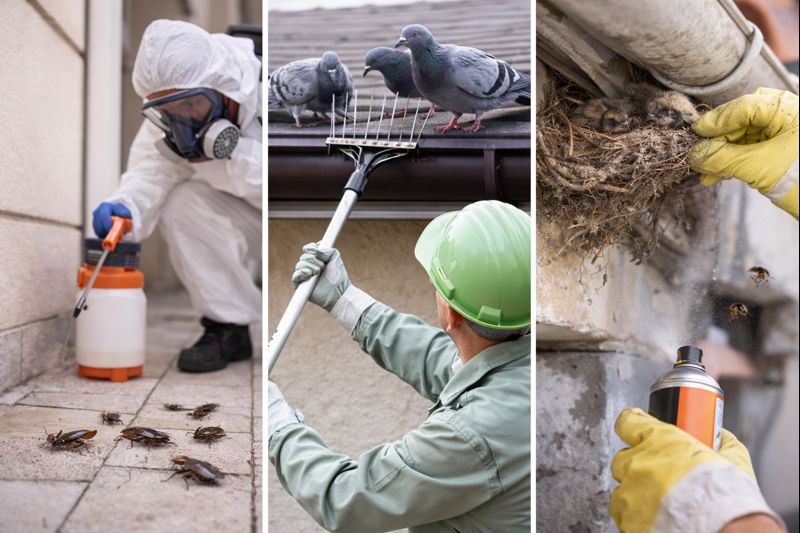
Non-lethal deterrents reduce return risk: spikes, netting, ultrasonic/visual deterrents, and avian gel are selected based on rooflines, ledges, and gutters. Professionals balance durability, appearance, and maintenance needs; ask for materials and expected service life.
If droppings or nests present health hazards, crews perform PPE-equipped cleanup and disinfection. Ask for details on waste disposal, surface decontamination, and respiratory protections used during the job.
Common Nuisance Birds
Pigeons often nest on building ledges, gutters, and HVAC units. They create heavy droppings that corrode metal and clog drains; control focuses on exclusion and ledge modification.
Starlings and sparrows enter vents, soffits, and attics to build nests. Their small size lets them exploit gaps; technicians typically use vent covers, mesh, and seasonal nest removal before egg-laying.
Swallows attach mud nests to eaves and beams, complicating removal due to protected status in some regions. You should confirm local laws; non-destructive deterrents like nesting deterrent strips or exclusion netting work well outside nesting season.
Seabirds and raptors may require specialized handling and permits. They typically affect coastal or industrial sites and might need wildlife agency coordination, trained handlers, and site-specific deterrents such as habitat alteration or falconry in commercial settings.
Emergency Bird Removal Services
Emergency calls usually involve birds trapped indoors, large numbers creating immediate health hazards, or active nests in critical equipment. Expect 24/7 response options from most full-service providers.
Initial steps include securing the area to protect people and pets, then rapid assessment of species and risk. Technicians prioritize removal methods that minimize stress to birds and prevent damage to your property or systems.
For hazardous droppings or nest-related fires, crews perform urgent cleanup and may temporarily seal HVAC and vent systems to prevent spread. You should receive a written action plan outlining follow-up exclusion work and recommended repairs.
If a protected species is involved, responders coordinate with wildlife authorities before relocation. Ask your service for expected timelines, required permits, and post-removal monitoring to ensure birds do not return.
Why Choose a Professional Bird Removal Service
A professional team reduces risk, stops damage, and prevents repeat invasions using humane, legal methods and species‑appropriate techniques. You gain trained assessment, tailored exclusion, and documented follow‑up that homeowners or businesses rarely achieve alone.
Benefits of Expert Intervention
Professionals identify species, nesting sites, and attraction sources quickly. That diagnosis matters: pigeons, starlings, and swallows require different deterrents and timing to avoid harming young birds or violating laws. You get targeted actions such as live‑capture when legal, safe removal of nests in hazardous locations, and cleaning of droppings using PPE and disinfectants.
Technicians use commercial tools and materials — netting, spikes, electrified tracks, one‑way excluders — installed to last. Those installations reduce structural damage from burrowing or roosting and lower fire and ventilation hazards from nests in chimneys or ducts. You also avoid personal injury from ladders, sharp roof edges, or animal bites.
Long-Term Bird Control Strategies
A reputable service creates a site‑specific plan that addresses why birds chose your property. They will seal entry points, install physical barriers, modify landscaping that attracts birds, and recommend changes like securing dumpster lids or altering outdoor lighting. These measures cut food, water, and shelter that invite repeat activity.
Expect scheduled follow‑ups and seasonal inspections. Technicians monitor for re‑nesting during breeding seasons and adjust measures as populations shift. Many providers offer warranties or maintenance contracts so you can document recurring issues and ensure persistent deterrents remain effective.
Legal and Ethical Considerations
Professionals know federal and local wildlife laws that protect species and prohibit removal during nesting in many jurisdictions. You avoid fines and criminal liability by using permitted methods and timing removals to comply with regulations. Providers often secure necessary permits when work involves protected species.
Ethical practice matters: humane methods reduce stress and mortality, and certified companies follow best practices for relocation or exclusion. You should request proof of licensing, insurance, and written method descriptions before work begins to confirm compliance and minimize liability for both you and the birds.

Related Posts